A First Visit to a New Public Library
A first visit to a new public library is easier when you know what to bring, where to ask for help and how to leave with a clear next step.
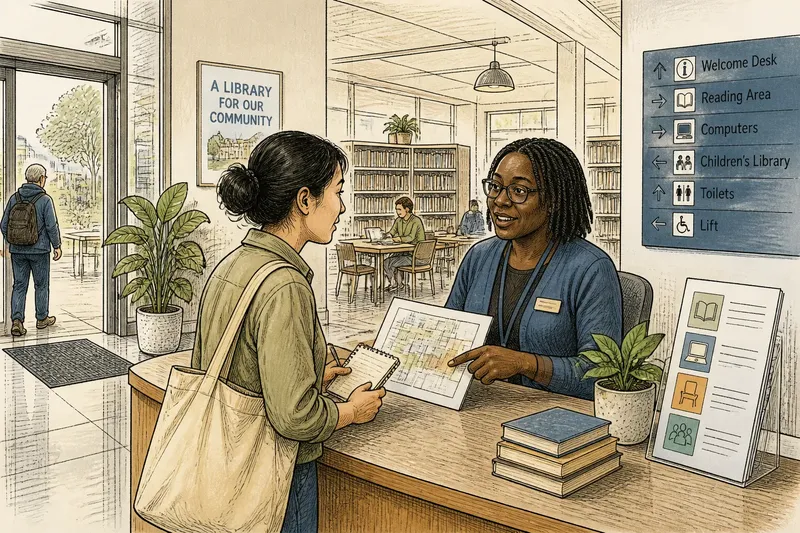
A first visit to a new public library goes better when you arrive with one specific task and a way to check whether the branch can help. You might be looking for a book, a quiet seat or access to a computer; knowing which one matters keeps the building’s many services from becoming a maze.
Plan around your purpose
Choose the reason for your visit before setting out. For a book, note its title, author or subject. For a computer, check whether the branch offers public access. For a quiet place to read, find out whether the building has reading areas and when they are open.
Use the library’s official page or service information to check opening hours, the entrance and any requirements for the service you want. Branches differ: a service offered at one location may not be available at another. If details are unclear, contact the branch and ask one focused question, such as whether computer access needs a booking.
Bring only what the task calls for: a library card if you have one, identification if the library says it is needed, and relevant notes or a device. For borrowing, a comfortable bag may help. There is no need to prepare for every possible service in the building.
Find the right desk
At the entrance, look for a directory, floor plan or welcome desk. Tell a staff member what you came to do rather than asking for a tour. “I’m here to find a quiet place to read” gives them a clear route to suggest.
For services that involve equipment or a booking, ask what this branch offers and what you need to access it. A brief answer can clarify whether to go to another desk, register first or try a different branch. Follow posted signs and staff guidance about rooms; a space that looks available may be reserved or set aside for a particular use.
As you make your way to the first stop, notice only the details likely to matter to you: the accessible route, toilets, help point or a nearby seat. Think of the route as a bookmark in a book: it should help you pick up where you left off, not record every page in the building.
Choose a useful first stop
Go directly to the place connected to your task: a catalogue terminal or lending desk for a book, a reading area for study, or the service desk for a computer. If the catalogue result is unclear, ask how it identifies an item’s location and availability. For a seat, note how to reach it from the entrance.
Imagine you arrive hoping to print a document. You ask at the welcome desk whether printing is available, learn that this branch requires a library account, then find out which desk handles registration and what identification it asks for. Your next decision is clear: register now if you have what is required, or return with it later. The visit has produced a useful answer even though the document remains unprinted.
If the service is unavailable, ask whether the library has an alternative, such as another branch or an online catalogue. Then decide whether that option suits your purpose; you do not need to search every floor before leaving.
Use shared facilities thoughtfully
Facilities can include computers, study tables, toilets, meeting rooms, displays and local information, but availability and access rules vary. Check the branch’s instructions for the particular facility you need. For shared tables, follow signs about quiet use or reservations, keep belongings out of walkways and leave the space ready for the next person.
If you are visiting with a child or someone who needs an accommodation, ask for the most suitable route or seating rather than assuming every area is equally accessible. Staff can explain the options at that branch. Where a rule is unclear, ask before using a room or equipment.
What should you ask?
Do I need a card to enter?
Entering the library and borrowing items may have different requirements. Ask what a card is needed for at this branch, particularly if you want to use equipment or take materials home.
Can I use a computer without booking?
Availability and access procedures vary. Ask whether you need to reserve a session, bring a card or speak to a particular desk before starting.
Where can I sit quietly?
Ask which area is suitable for quiet reading and whether any rooms are reserved. If the available spaces are busy, decide whether another area or a later visit would work better.
How do I locate a catalogue item?
Give staff the title, author or subject and ask how the catalogue shows an item’s location. Once you understand the result, you can decide whether to look for it now or request help with the search.
Leave with a next step
Before leaving, make a brief note of the useful detail you are most likely to need again: the desk name, route to a reading area or requirement for computer access. If you started a request or borrowed an item, check where returns go or how to collect the request before heading out.
That note makes the search phrase “first visit to a new public library” less about touring a building and more about learning one reliable route through it. On a return visit, you can add another service if a real need arises; the first visit has already given you a practical starting point.